
How credit card interest works
One major concept to understand when you’re using credit cards is how credit card interest works. Because credit card interest rates can be higher than rates for other types of borrowing products, it’s important to know how credit cards can impact your finances.
In simple terms, credit card companies let you borrow funds to make purchases. They then add an interest charge to your balance if you don’t pay the full balance by the due date. The amount you pay will depend on your annual percentage rate (APR) and your credit card balance.
Other factors can come into play, too, such as a promotional period with an introductory APR, the number of days in the billing period, and your average daily balance. This guide will break down exactly how credit card interest works, how it’s calculated, what’s considered a good interest rate, and tips for minimizing the amount you pay overall.
What is credit card interest?
Credit card interest is the cost of borrowing, or more specifically, the charge you pay when you carry a balance on your credit card. It’s based on your APR and your balance. You can avoid paying interest with full payments each month.
Credit cards have different APRs for different types of transactions. The one you’re probably most familiar with is the purchase APR, or the amount of interest applied to purchases you make with your credit card if you do not pay the balance in full by the due date. If you transfer a balance to a credit card, the card issuer will apply a balance transfer APR to the transferred amount and only that amount. There’s also a separate APR for cash advances. If you miss payments, it could trigger a higher penalty APR.
Credit card interest is the main way credit card companies make money. When people carry unpaid balances and make just the minimum payment, the card issuer earns interest on the balance on the card. You can minimize the amount of interest you owe by paying your balance in full (or as much as you can) above the minimum payment due.
How is credit card interest calculated?
Credit card interest is calculated using a complex formula. Although APR is a yearly percentage, interest usually accrues on a daily basis. Per the CFPB, this daily periodic rate calculation takes your average daily balance for the billing cycle, then applies the APR to determine the amount of interest you owe for that month.
How to calculate credit card interest payments
- Average daily balance: This number is found by taking your balance each day of the billing period, adding all the daily balances together for the entire billing period, and then dividing by the number of days. Note that the billing period can vary depending on the card issuer and the month, but it’s usually between 28 and 31 days.
- Calculating interest: The next part of the calculation is to multiply the average daily balance by the daily periodic rate times the number times the number of days in the credit card billing cycle. Then, to convert the number from a yearly, divide by 365.
Credit card interest calculation example
With an average daily balance of $742, an APR of 18.99%, and a 30 day billing cycle, your credit card interest would calculate like this:
$742 x 18.99% x 30 / 365 = $11.58
This means your interest charge that month would be $11.58.
Increasing either your average daily balance or having a higher APR would result in a higher interest charge.
Alternative method
Another way to approach the credit card interest calculation is to calculate your daily periodic rate first—that is, your APR expressed in daily form. To find your daily periodic rate, divide your APR by 365. Using the example above, it would be 18.99% / 365 = .0005202.
Next, you would multiply your average daily balance by the daily periodic rate, and then by the number of days in the billing period. Using the example of an average daily balance of $742, the credit card interest calculation would look like this:
$742 x .0005202 x 30 = $11.58
Variable vs fixed interest rates
When researching interest rates, you may hear the terms variable interest rates and fixed interest rates. For the vast majority of credit cards, the interest rate is variable. That means your credit card APR may fluctuate based on economic factors. For example, if the Federal Reserve raises or lowers interest rates, credit card companies usually increase or decrease card APRs shortly thereafter.
In general, the APR set by credit card issuers is tied to the prime rate. If the prime rate rises, it’s likely that credit card interest rates will rise as well.
Variable credit card rates usually do not increase or decrease dramatically from a single change in the prime rate. Unlike with some lending products like mortgages, where a variable rate could be associated with more risk, the impact may be negligible with credit cards. The only time you may see a major jump in your APR is if you aren’t keeping your account in good standing, which could trigger a higher penalty APR if your credit card agreement provides for that.
While it may be possible to find a few outliers such as small credit unions offering a fixed rate on a credit card, this is the exception, not the rule.
The impact of credit card interest
Your credit card statement provides a wealth of information, including your statement balance, interest rate, and interest payments. You can also see the impact of credit card interest on your finances.
Each credit card statement is required by law to include a minimum payment warning box. This box details how long it would take to pay your balance if you only made minimum payments, and what it would cost in interest at your current APR. This can be eye-opening, because it illustrates how those seemingly small interest charges can effectively keep you in credit card debt—and how interest charges add up over a long period of time.
When you pay more than the minimum monthly payment, more funds will go toward the outstanding balance. As a result, you will pay down the balance more quickly.
What is a good credit card interest rate?
As of February 2026, the average APR across all types of credit cards was 21%, according to the Federal Reserve. A good credit card interest rate is one that is below the average of comparable cards. Note that some types of cards, like rewards cards or store credit cards, tend to have higher than average APRs.
Many credit cards advertise an APR range for new applicants. People with good credit scores can usually qualify for the lower interest rate in the range, while less creditworthy borrowers will be offered a higher rate. Check your credit report and credit score before you apply for new credit. This will help to provide realistic expectations about which cards and which end of the APR range may be achievable.
Credit card rewards and benefits
Cards marketed as low interest rate credit cards can be appealing for consumers who may occasionally revolve a balance. However, APR is just one of several factors to consider when searching for a credit card. You should also review each card offer to see if there’s an annual fee or rewards and benefits.
Some of the best credit card offers for you may not necessarily be the ones with the lowest APRs. You’ll have to decide which factors are most relevant to your needs and preferences.
If you’re diligent about paying your credit card bill in full and avoiding interest charges, credit card interest rate becomes a moot point. You can then focus more on rewards, cash back, and benefits when card shopping.
Ask for a lower credit card interest rate
If you already have a credit card account, you can call your issuer to try to negotiate for a better interest rate. If you have kept your account in good standing, they may agree to a lower rate.
0% Introductory APR
Credit cards with a 0% introductory APR can offer more flexibility to cardholders. They may allow you to make a larger purchase and give you more time to pay it off. They may also allow for balance transfers from an account with a higher rate.
These cards provide cardholders with a set period of time when interest isn’t charged. This interest-free period typically ranges from 12 to 18 months, but it may be longer in some cases. If you do transfer a balance, keep in mind that balance transfer fees usually apply.
Conclusion
Knowing the ins and outs of credit card interest rates can make you a more informed consumer. By understanding how to calculate credit card interest and the impact that those interest charges can have on your personal finances, you can feel more confident about the cards you choose and the purchases you make.
If you are able to pay your balance in full each month, credit card APR can become less of a concern, leaving you to focus instead on the value that cards can offer you. If not, you may want to consider lower interest rate cards that can help reduce your borrowing costs.



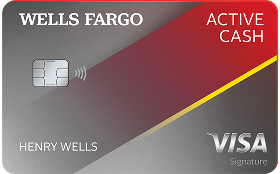
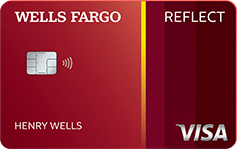
Experience more as a Wells Fargo credit cardholder
From cash rewards to low intro APR, to rich rewards – Find the credit card that’s right for you. That’s real life ready.
Find the credit card
that's right for you.
